Tuesday, March 5, 2019

Review of DS9 Episode 1.10 "The Nagus"

I'm in the process of rewatching Star Trek: Deep Space 9 and reviewing/recapping each episode in detail. Join me in my in depth look at the deepest and most complex Star Trek series to date.


The leader of the Ferengi, Grand Nagus Zek, shows up on DS9 and holds a conference for exploring business opportunities in the Gamma Quadrant. But at the conference he suddenly retires and names Quark his successor—much to the consternation of his son and the Ferengi merchant lords—and then shortly afterwards dies unexpectedly. Now Quark must navigate the treacherous waters of Ferengi governance while dealing with attempts on his life by those jealous of his new prestige and power.

This is technically a terrarium episode, but you almost don't notice because of the sweeping galactic implications of it. Episodes like this really fulfill the core promise of DS9 as a show; no longer do we watch a crew going from place to place exploring the unknown, having adventures, and then leaving behind the mess for somebody else to clean up. Now we follow a crew that has the unknown come to them, and the consequences of those encounters are real and must be dealt with. This is more challenging to write because it's more restrictive, but restrictions breed creativity, and while the DS9 writers don't always adequately step up to the challenge, in this episode they definitely did.

This is a fascinating episode because prior to this, Star Trek had always glossed over how Ferengi society works; this is the first in what would become a long line of Ferengi-centered eps on the show. The Ferengi are essentially the exact opposite of the Federation. The Federation has abandoned all market-based activities, including commerce, acquisition of assets, and even money itself; while Ferengi society is entirely based around those things.

If you think about it, neither society is realistic. Both are extreme to the point where it's impossible that they could function as portrayed. The Federation's system implies several dark realities, most notably a denial of people's right to self-determination. If your society needs janitors to function and nobody wants to be a janitor, what happens? Since you can't pay people to be janitors, the only other option is coercing them into being ones. In essence, the Federation's marketless system implies that they resort to nothing less than slavery.

The Ferengi, meanwhile, have no values other than the acquisition of wealth. They treat contracts with the utmost reverence, but seem to have no laws outside of strict adherence to contracts. They treat charity with disgust and view government-run social programs as the ultimate evil. Who takes care of the sick, poor, old, and/or disabled? The implication is that millions of vulnerable Ferengi must be dying in the streets every day. For that matter, according to Ferengi values, why should a parent even feed their own child? There's no profit in it. Unless they are engaging in child slave labor. Shall I go on? Needless to say, no society could function like this. It's impossible; it would be virtual anarchy and inevitably result in the collapse of their civilization.

That all said, there is a deep and rich potential for storytelling when two such opposing societies (however unrealistic they may be) come into contact with each other. TNG never delivered on that potential, but DS9 does here, and will continue to do so in a big (though occasionally disappointing) ways through seven seasons.

THE GOOD

  • Wallace Shawn is great as Zek. He was born to play a Ferengi. As I've noted before, the recurring guest stars are the best part of DS9, and episodes that feature them like this one are almost always very good.
  • O'brien is back! I missed him but didn't realize just how much I missed him until he walked into that classroom. The show is significantly weaker without him, as the run of three mediocre episodes in his absence proved.

THE BAD

  • The B plot is boring and has some bad acting from Cirroc Lofton and Aron Eisenberg. But they're kid actors so that's moderately understandable and expected. A better B plot or a more fleshed-out A plot and no B plot could have pushed this to a 9 or 10 rating.

THE UGLY

  • This episode is the first time the Rules of Acquisition are mentioned. Rules quoted count: 2 (the 1st and 6th), 2 total for the series
  • Rom's voice and mannerisms are much different from his first appearance and match his character for the remainder of the show's run.
  • Rom trying to kill Quark was shocking. I forgot he did that and it shows how much his character changed/grew over the years.
  • What happens to Zek's son after this? He never appears or is mentioned again, despite many more Zek-centric episodes.
  • Odo Shapeshift count: 1 (turns into goo to pass through a locked door), 6 total for the series

RATING: 8/10

Friday, March 1, 2019

Review of DS9 Episode 1.09 "Move Along Home"

I'm in the process of rewatching Star Trek: Deep Space 9 and reviewing/recapping each episode in detail. Join me in my in depth look at the deepest and most complex Star Trek series to date.


First contact with a gaming-obsessed species from the Gamma Quadrant takes a bad turn when Quark is caught cheating them at Dabo. They get revenge on him by forcing him to play a game of theirs in which Sisko, Kira, Dax, and Bashir are the real life pawns that are forced to confront dangerous obstacles in their attempt to "move along home."

This is a frustrating and frankly quite stupid episode. It's memorable due to just how weird it is, but overall it's bad.

THE GOOD

  • Sisko's approach to first contact compared to Picard or even Kirk reveals a lot about his character. Picard in particular seems to relish first contact. Sisko seems to dread it. He is definitely not a diplomat and it probably makes no sense that the Federation didn't send somebody better for the job of receiving their first official visitors from the Gamma Quadrant.
  • The exchange when Dax wants Sisko to leave her behind and he refuses is the best part in the episode. Their interactions are always so interesting due to their long and complicated history with each other. Sisko was Curzon's mentee, and now he is Jadzia's commanding officer, and that conflicting dynamic is fascinating.

THE BAD

  • The whole structure of the game (or lack thereof) is frustrating. Since Quark (and by extension the audience) doesn't know the rules, everything that happens feels totally random and arbitrary.
  • More terrible acting from Alexander Siddig
  • The obstacles encountered in the game are neither clever nor interesting.
  • The revelation at the end that nobody was ever in danger retroactively ruins the one positive aspect of the plot, which is the tension from worrying about what will happen to the characters.
  • No O'Brien for the third ep in a row. Jake mentions that Keiko is still on Earth, so obviously he is with her still. Meaney is lucky he got to sit this one out.

THE UGLY

  • Why does Sisko have a tricorder? He was sleeping in bed (in his uniform, no less), and wakes up in the game with a tricorder strapped to his hip. Utter nonsense.
  • Quark apparently faces no consequences for his actions.
  • The conversation between Brennin and Odo while scanning the alien ship provides some clues as to how the game technology works. Brennin implies that it reads like a continuous transporter beam. Most likely, the four players were locked in some sort of sustained transporter field where matter and energy is able to materialize around them and be manipulated according to the requirements of the game. The tricorders read everything in the game as real, so it's not a holosuite or virtual reality most likely, but rather some highly advanced manipulation of matter and energy, like a holosuite but where everything is fully physical rather than holographic.

RATING: 4/10

Wednesday, February 27, 2019

Review of DS9 Episode 1.08 "The Passenger"

I'm in the process of rewatching Star Trek: Deep Space 9 and reviewing/recapping each episode in detail. Join me in my in depth look at the deepest and most complex Star Trek series to date.


Bashir and Kira are returning to the station via runabout when they encounter a ship in distress. They rescue the lone survivor, an alien security officer, but are unable to save her prisoner, a man named Vantika whom she claims is extremely dangerous. Upon returning to the station, someone begins tampering with station security and appears to be plotting to steal an inbound shipment of rare material, and all evidence points to Vantika being the one responsible for the issues. But how can that be if he is dead?

This is another inconsequential episode, although the wormhole does at least play a small part, as the shipment of deuridium is coming from the Gamma Quadrant. The tension and pacing are both decent. Unlike the previous episode, the performances of the actors are all very good (with one very obvious and notable exception). Sisko, Quark, Odo, and Jadzia all gets chances to shine and their performances are what make this a slightly above-average ep.


THE GOOD

  • "If you want my opinion—" "Actually I don't." Man I love Sisko's no-BS attitude. His handling of Odo's wounded pride is also very impressive. You gain a lot of admiration for Sisko's ability to command in this episode. He is fair but doesn't tolerate any nonsense.
  • As mentioned above, several characters have multiple noteworthy moments. Rene Auberjonois steals the show though. Every scene with him is great, from his conflicts with Lt. Primmin, to his banter with Quark, to his no-holds-barred conversation with Sisko. And even though Odo is too hard on Primmin at first, he knows when he was wrong and gives him due credit at the end, showing he is a fair, if harsh, judge of character.

THE BAD

  • Oh my Prime Directive is Alexander Siddig bad here. So, so bad. Especially the scenes where he plays Vantika. I never realized what an awful actor he was in the first season until this time rewatching the show. Fortunately, he does improve as the show proceeds and has actually had a very successful acting career post-Star Trek. But boy is he bad here.
  • Maybe it's because I've seen the episode several times before, but it seemed painfully obvious to me that Bashir was the bad guy all along. There was no mystery that I could discern. However, in spite of knowing I still felt the tension from seeing Bashir/Vantika skulk around the station and mess everything up, so that's a positive at least.
  • Going off the above "bad," it's baffling to me that nobody suspected Bashir, especially Jadzia after discovering how Vantika had survived, or Kira after seeing Vantika grab Bashir right before dying. Definitely makes the crew look incompetent.
  • No O'Brien for the second episode in a row.

THE UGLY

  • PLOT HOLE: Now that Vantika has a new (human) body, he no longer has any need for the deuridium since he originally wanted it to prolong his life. None of his actions after the first scene make any sense in that light. He hangs around the station and waits to get caught for...absolutely no reason.
  • Runabout used: Rio Grande multiple times
  • The material that Vantika is trying to steal, deuridium, is apparently fictional.
  • The freighter carrying the deuridium has Federation LCARS control interfaces, in spite of not being crewed by Starfleet personnel. That would explain how Bashir knew exactly what button to push to lower the shields, even in his disoriented state.
  • Glial cells are what Vantika uses to transfer his consciousness into Bashir, but it's unclear how that would work since glial cells are non-neuronal, but are rather part of the central nervous system that surrounds and cares for the neural tissue.

RATING: 6/10

Tuesday, February 26, 2019

Review of DS9 Episode 1.07 "Dax"

I'm in the process of rewatching Star Trek: Deep Space 9 and reviewing/recapping each episode in detail. Join me in my in depth look at the deepest and most complex Star Trek series to date.


A foreign government wants to extradite Lt. Jadzia Dax to try her for treason allegedly committed by the former Dax host, Curzon, who was also Commander Sisko's close friend and mentor. Sisko is able to force an extradition hearing arbitrated by a Bajoran representative to attempt to determine whether or not Jadzia can be tried for the crimes of which her predecessor is accused.

Star Trek has a number of good courtroom drama episodes, with "The Measure of a Man" from TNG's second season leading that impressive collection. "Dax" does not unfortunately find a place among those quality stories. While the premise sounds like it could be interesting, the execution does not live up and the writers failed to make any relevant connection to contemporary social issues (at least that I could discern). The "drama" here is flat, the social commentary absent, and the acting dull and lifeless—in strong contrast to the aforementioned legendary episode from the sister show—all of which adds up to a below-average episode in this first season.

THE GOOD

  • It's nice to finally get an episode centered on Dax. She has been seriously neglected as a character up to this point, including the aspects of her complicated relationship to Sisko, and this episode does a bit to explore that relationship. Unfortunately, it ends up mostly being Avery Brooks' mediocre dialogue delivery versus Terry Farrell's stoic silence (which she does well, but it's just not interesting).
  • Does a good job of demonstrating how, even though she appears to be a young woman, Jadzia has the integrity and conviction of someone much older and wiser. That is really the only lasting takeaway from the ep.
  • The shot where the tractor beam chases the Klaestron ship off the screen and then a few seconds later drags it back onto frame is great. Nice blending of quality effects with creative shot design.
  • The cranky old Bajoran arbiter is amusing. She is the only one who isn't phoning in her performance here.

THE BAD

  • Ironically, in the episode that bears her name and is ostensibly all about her, Dax herself does almost nothing here.
  • The story is honestly boring. The ending is a rushed and anticlimactic deus ex machina.
  • I hate to keep comparing this episode to "The Measure of a Man," but every courtroom drama ST ep naturally is benchmarked against that great ep. What is lacking here is...literally everything. The acting is far inferior. There are no epic speeches. No thrilling dramatic moments (by contrast, Riker's "Pinocchio's strings have been cut" moment still gives me goosebumps to this day). No important social commentary. "TMoaM" had so many powerful things to say about slavery, consciousness, free will, and more. What is the relevance of this ep? Are they commenting on the importance of redemption? Something about amnesia? I have no clue. It all feels so pointless, especially with the abrupt and unsatisfying ending.

THE UGLY

  • First mention of the Klingon coffee, raktajino, which would become a station favorite, essentially replacing Earth coffee on the show.
  • Bashir's flying elbow into the Klaestron agent trying to abduct Dax looks like something Kirk would try. The whole brawl was sloppy like a TOS fight, which I found surprisingly entertaining.
  • Bashir retcon watch (WARNING: this section contains major spoilers for a future story arc) — With the way Bashir's physical abilities are portrayed post-genetic-engineering reveal, he should have been more coordinated during the critical fight to try and rescue Jadzia from the Klaestron abductors. Instead he looks like an adolescent who doesn't understand how human limbs work. He looks like Gumby getting electric shock therapy. The closest we've ever come to a real life version of a Bethesda game glitch was Bashir's "fight scene." It's bad, is what I'm saying.
  • It seems highly unlikely that the culpability of current hosts for the crimes of former hosts would not be an issue that would have previously been settled by Trill law, and thus would serve as a guide for the proceedings of this ep. And yet no such precedence is ever mentioned.

RATING: 5/10

Monday, February 25, 2019

Review of DS9 Episode 1.06 "Q-Less"

I'm in the process of rewatching Star Trek: Deep Space 9 and reviewing/recapping each episode in detail. Join me in my in depth look at the deepest and most complex Star Trek series to date.

The Ganges returns from the Gamma Quadrant with a surprise passenger aboard—Vash, Captain Picard's love interest last seen with powerful entity known only as "Q." It's not long before Q himself shows up and starts to annoy the crew of DS9 in his uniquely irritating way. But with him and Vash also arrives a new danger that threatens the station. Will Sisko's crew be able to figure out what is happening before the station is destroyed? Is Q responsible? How does Vash fit into what is happening?

So for the third time in six episodes, we get crossover characters from TNG, cementing even further that these shows are tightly linked and not afraid to build off of each other. Q is almost always a treat on TNG, and the episodes he appears in are some of the best from that show (with a couple of exceptions). This would be his only appearance on DS9 and it's not too hard to see why. The energy that John de Lancie brings to the screen with this character is incredible, but his chemistry with Sisko is...well...frankly nonexistent—a far cry from the world-class dialogue filled with Shakespeare quotes and historical allusions he exchanges with Patrick Stewart over on the sister show. Part of that is due to Brooks' far inferior acting talents, but part of it simply Sisko's personality. He does not tolerate BS and Q is pretty much the definition of BS.

The scenes with Vash and Q are good though. And with Vash and Quark. Basically Vash is always a highlight. I'm surprised Jennifer Hetrick never got more roles back in the day because she steals the show in all of her Star Trek appearances. And despite not having Picard to banter with, de Lancie is still very entertaining as the enigmatic Q.

The story is well-written here too. The suspense is maintained right up until the end and it's fun to try and guess whether or not Q is nudging things one way or another to help or simply for his own amusement. As usual, even by the end of the ep we really have no idea what his intentions were.


THE GOOD


  • O'Brien's face in the opening shot. His reactions to Bashir's whole Starfleet Medical finals story is amazing. We see a continuation of O'Brien's strong dislike for him from the last ep.
  • O'Brien describing Vash "The captain likes a good challenge, sir." Way to put it diplomatically, Miles.
  • O'Brien on seeing Q on DS9 "Bloody hell!" Colm Meaney could have a YouTube channel called "O'Brien Reacts to Things" and I'd watch the hell out of it.
  • Quark is so wonderfully sleazy here. It's a credit to Armin Shimerman's acting talent that he can be charismatic with a giant latex mask and fangs on.


THE BAD


  • Some cringy scenes with Bashir. The opening scene when he's telling about his medical finals like it's a war story is delightfully campy, but him hitting on Vash is more weird than fun.
  • Aside from being the link to Vash, Q really doesn't do much here story-wise. He's pretty superfluous aside from acting as a red herring. Again, it's no surprise he doesn't return to DS9. He just doesn't fit the tone of the show.


THE UGLY


  • How much must it enrage Sisko to get continuously compared to Picard by Q? I feel kind of bad for him because every time that name is mentioned, it must remind him of the death of his wife. No wonder he's so surly with Q.
  • The gas used to trace the power drains, tritium, is a radioactive isotope of hydrogen. It is indeed very toxic when inhaled, but how it would make changes in the graviton field easier to detect is a mystery since gravitons are currently still only hypothetical.
  • It's somewhat subtle, but Q actually appears to help the crew figure out the mystery (or tries anyway). When they are blaming him, he reacts by insulting them but then says that while they are trying to figure it out, Vash is "engaged in base commerce" and says that she is the real danger. This seems to be his MO—be annoying and belittling and pretend not to care while subtly helping the crew survive a serious threat. It's strange that he can simultaneously be both childish and paternal. Of all the many great characters in the history of Trek, Q has to be one of the most enigmatic.
  • Bashir retcon watch (WARNING: this section contains major spoilers for a future story arc) — First mention of him mistaking a preganglionic fiber for a postganglionic nerve on his Starfleet Medical finals. We learn much later on that he missed that question on purpose so as to not draw suspicion about his genetically-enhanced nature.
  • Odo shapeshift count: none on screen, but it's implied that he was the wine bottle in one scene.

RATING: 7/10

Friday, February 22, 2019

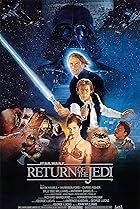
The Saga Concludes: Episode VI Return of the Jedi


I just finished re-watching all six Lucas-era Star Wars films in episode order (I-VI) with the commentary and want to give my reviews of each film. Let me preface by saying that I am a lifelong Star Wars fan who grew up with the original trilogy and literally have no memory of a time in my life before SW. As such, I am not going to be totally unbiased in my reviews, but I will try to be somewhat objective.

A year after Luke's fateful confrontation with Vader, our heroes (including Lando now) are back on Luke's home planet of Tatooine to try and free Han from his carbonite prison in the clutches of Jabba the Hutt. Afterwards they reunite with the Rebel fleet, now much larger and more powerful than ever, where they plan a strike to destroy a second Death Star being constructed under the direct supervision of Emperor Palpatine. The resulting mission climaxes with a dramatic confrontation between Luke, his father, and the emperor to decide the fate of the Skywalkers, the Jedi, and that of the entire galaxy.

Coming to the end of the saga is always such a bittersweet experience for me. I know that RotS was the last one made, but watching this movie is when it really hits me that George Lucas will not be making any more movies like this. The SW saga has had such a treasured place in my heart for my entire life, and the pale imitations that Disney keeps pooping out are more of a reminder of something I can't have any more of (new SW material) than any actual consolation.

That said, this is unfortunately a rather flawed movie. I think it's the most inconsistent in quality of the six movies, with very high high points but a lot of mediocre stuff as well. Lucas really tied his hands by not resolving anything in ESB, especially by leaving the Han Solo cliffhanger, which leads to the awkward situation where the first act of this movie is not really related to the overall plot. As such, the whole story here feels disjointed and not smooth. Let's get into it.


THE GOOD

  • All the scenes with Vader, the Emperor, and/or Luke are really the core of this movie and what saves it from mediocrity. I'm constantly impressed by Palpatine's skill at manipulating people. Even though Luke knows he is being manipulated, he still can't control himself. And sure, part of that is the Skywalker impulsiveness, but major credit goes to Palpatine for being so good at what he does.
  • As a kid, the final space battle is really why I loved this movie. To see how far the ILM team came in just 6 years is very impressive, because the scale of that battle is something they could only imagine when ANH was made, and it probably pushes the limit of what can realistically be done without cgi.
  • It's really satisfying to see Luke finally as a fully-powered Jedi. The way he completely dismantles Jabba's private army hearkens back to Qui-Gon and Obi-Wan being utterly unstoppable against the battle droids in Episode I.
  • I know I've mentioned it several times before in other reviews, but Ben Burtt's sound design is just fantastic. The sounds of the speeder bikes in particular are something that has always stuck with me for how cool and unique they sound.
  • The choral music that comes in during the final part of the duel between Vader and Luke is amazing and gives me goosebumps every time.
  • There are some strong Messianic themes associated with both Luke and Anakin. Luke has come to redeem the sins of Anakin the same was Christ did for Adam. Anakin and Adam both chose themselves and their selfish and prideful desires over doing what was right. Luke, son of Anakin, and Christ, son of Adam, make the opposite choice, choosing self-sacrifice over evil, thus redeeming the sins of their fathers. But in the end it is Anakin, conceived of a virgin, who ultimately destroys death (Palpatine) and restores life (bringing balance to the Force)—sacrificing his own life to do so before being reborn in the Force. So in a way he plays both Adam and Christ in this particular Messianic tale.
  • I know this isn't a popular opinion, but I absolutely love that the DVD/bluray version has Force ghost Anakin played by Hayden Christensen. There's something so powerful about seeing him the way he was before he defiled his soul with evil—smiling and happy with his old friends and mentors again. It gets me in the feels every time.

THE BAD

  • The entire first act on Tatooine. The only benefit of it is that it establishes Luke as a full-on and very powerful Jedi now. Aside from that, it serves no real purpose for the plot.
  • Boba Fett's inglorious end.
  • The Ewoks. They bog down the story and it's not really believable to see them beating the Imperial troops. It was an interesting idea to try and parallel them with Germanic tribes beating the Roman Empire, but the execution was ruined by the fact that they are two foot tall teddy bears.
  • Death Star rehash. I get that this is the way Lucas originally wrote it and that the Death Star stuff was moved to ANH just in case that was the only movie made, but once it became clear that the whole trilogy was getting made, he should have come up with something different for this movie rather than just doing that again.
  • I don't like the special edition diegetic music at all. Give me back the Yub Yub song, please.
  • I also don't care for the beak they put on the Sarlacc. Overall, the special edition changes were definitely not a improvement for this film.

THE UGLY

  • It's a little odd that Palpatine doesn't struggle at all when Vader picks him up. He just like "Yep, this is my life now" as he gets tossed down the shaft.
  • The look of betrayal by Vader when Palpatine tells Luke to kill him (great job by David Prowse portraying that shocked reaction without any facial expressions or dialogue to work with). It's the exact same look Dooku gives Palpatine when he tell Anakin to kill him. I really don't know what Vader thought would happen when he brought Luke to the Emperor. He knows there can be only two Sith at a time, so either he was hoping Luke would kill Palpatine (no indication given of that in this movie) or that Palpatine would kill Luke (in which case why bother capturing him). My only conclusion can be that Anakin is just not very bright at all. Which retroactively make Vader much less cool than we used to think he was. He really does seem like a tragic Shakespearian character in the end, a fool like Othello who wasn't smart enough to see how Iago was manipulating him the whole time and his lack of perception and critical thinking was what undid him. The difference between him and Othello is that the latter is a pawn all the way to the end, while Anakin seizes some small measure of agency by killing his Iago at the end. However, much like with the Shakespeare play, I think it's possible that the SW saga can be interpreted in such a way that the villain is actually the protagonist and the supposed hero is merely a pawn in his game. Throughout the saga, it is Palpatine who always is in control and proactive in pushing forward his own goals. He has almost all the agency in these movies and thus in many ways he is the protagonist, just like Iago.

RATING: 9/10

Thursday, February 21, 2019

Review of DS9 Episode 1.05 "Captive Pursuit"

I'm in the process of rewatching Star Trek: Deep Space 9 and reviewing/recapping each episode in detail. Join me in my in depth look at the deepest and most complex Star Trek series to date.

A damaged ship comes through the wormhole, piloted by an agitated creature named Tosk. He comes aboard DS9 for repairs and O'Brien befriends him and tries to earn his trust to figure out what he is so afraid of. He gets his answer when an advanced alien ship appears from the wormhole and attacks the station, but it quickly becomes apparent that their real target is Tosk. Now the crew of DS9 is faced with a moral dilemma and O'Brien's friendship with Tosk may influence him to put his entire career on the line to help his new friend.

Finally we get an episode with the Gamma Quadrant playing a role. I don't know why they waited until the fifth episode to start unpacking this particularly dense web of storytelling potential, but I'm just glad we are here now. The wormhole/Gamma Quadrant will be the driving narrative force for the whole seven seasons of DS9 and it all starts right here, which is very exciting.

Furthermore, even though the terms "Dominion" or "Jem'Hadar" are not mentioned here, this episode definitely foreshadows both. Most obviously: Tosk is very clearly Jem'Hadar or some closely related species created by the Dominion. It seems like a reasonable inference that the Hunters are members of the Dominion and were given slightly altered Jem'Hadar for their hunt (either that or the Hunters created the Tosk and then the Founders liked them so much that they adapted them as their own footsoldiers). Either way, the Dominion connections are clear, though not explicitly stated.

This episode is jam packed with story. At one point I thought the episode was probably close to over and checked the time stamp. Nope—there was still almost a third of it remaining. Probably more happens in any one act of this episode than in the entirety of the previous episode. So obviously there is a lot going on but we'll try to get into some of the details.

THE GOOD


  • This story hits all the notes of a classic Trek episode. Moral dilemmas, touching human moments, conflict between Federation and alien value systems, tension and suspense, sci-fi technology, exploring the unknown, and of course, Prime Directive invocations. If you were to design a prototypical good ST episode, this is exactly what it would look like.
  • Colm Freaking Meaney. This is why they brought him over to DS9; as a starring actor he can do the same thing Patrick Stewart does on TNG by taking an already very good script and making it great with his acting abilities. There is not a warmer or more relatable character in all of ST than Miles Edward O'Brien, and much of that is due to Meaney's talents.
  • I like the interior design of Tosk's ship. The narrow crawl space to get to the inner workings of the ship feels realistic for a 1-man craft.


THE BAD


  • The action sequences are very primitive and poorly done. Why do Star Trek directors think that combat is two groups of people standing in the open taking turns firing at each other? This isn't 1776.
  • As good of an actor as he is, Meaney doesn't always sound like he believes his own lines when he has to speak technobabble. The lines in this ep about reversing polarity and bypassing phase inducers sound like an actor reading lines, not an engineer talking about his job.
  • The episode focuses almost completely on O'Brien, which is nice, but the bad part is that the other characters don't get to do much, including Jadzia and Bashir, who have now played minimal roles in three out of the last four eps.


THE UGLY


  • Miles cutting Bashir off sharply during the scene in Ops. This is the first indication of his dislike for Julian.
  • Odo Shapeshift count: 1 (picture), 5 total for the series. It seems like my memory of Odo not shifting a lot was faulty, at least so far.

RATING: 8/10